From Clay to Sculpture
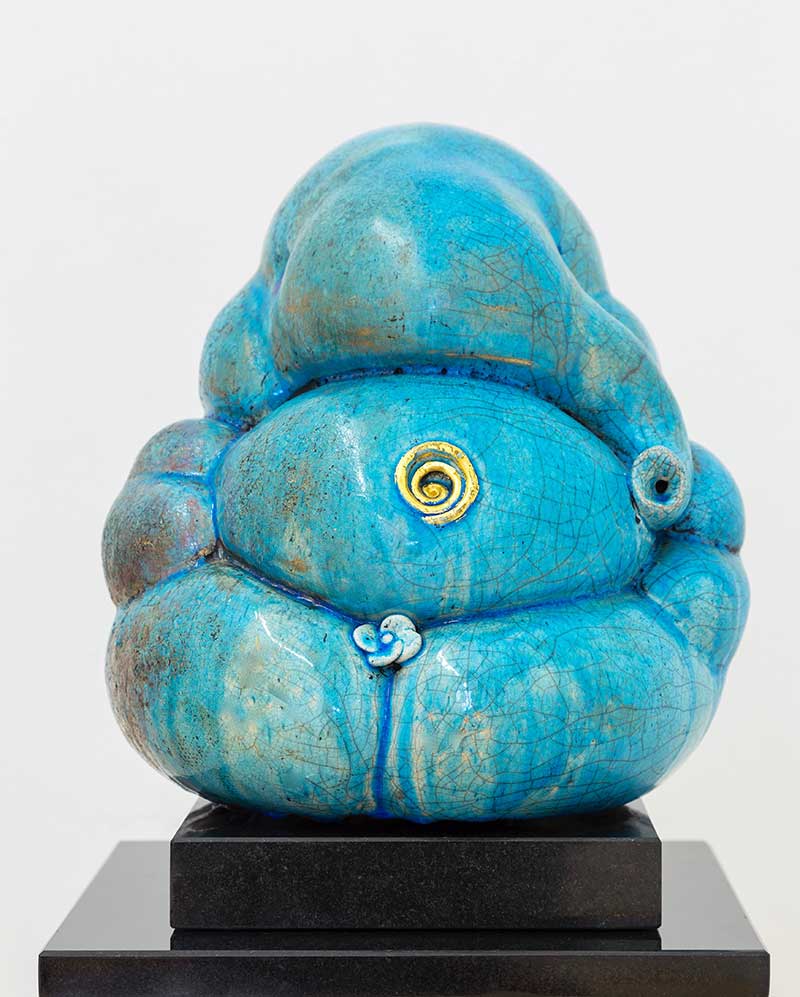
Each sculpture emerges slowly through a dialogue between hand, material, fire and personal experience. Built layer by layer, the forms evolve intuitively—shaped by bodily memory, balance and the unpredictability of the firing process.
Ceramic Technique
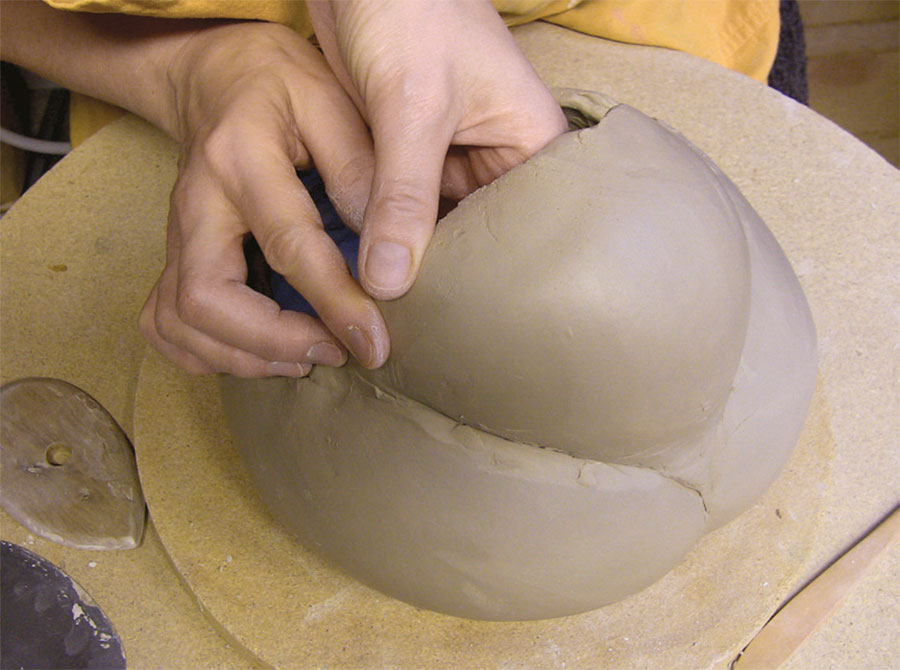
The sculptures of Brigitte Saugstad are individually hand-built and modelled. She works with different ceramic bodies, including fine stoneware and coloured clays.
The surfaces retain the traces of both touch and fire. Colour, ornament and texture emerge through an intuitive dialogue between clay, glaze, fire and the movement of the hand.
Underglaze colours and glazes are applied in multiple layers. Selected works are finished with liquid bright gold for ceramics, applied to the glazed surface and fused with the glaze in a third firing.
Some sculptures incorporate crystal elements, while others are created using the traditional Japanese Raku firing technique. Certain works are additionally gilded with 23.5-carat gold leaf.
Ornament is not decoration
Language.
Trace.
Map.
Poem.
Melody.
From my years in figure skating, I remember drawing lines across the ice with my blades. Jumps, spins and connecting steps traced rhythms through space—carried by music and movement. Perhaps that was where my understanding of ornament first began.
Like the notes of a musical composition, ornament carries rhythm and movement within itself. It connects forms, allows them to flow, and reveals an inner sense of motion.
When I model clay, I translate this movement into form. Ornament is not added afterwards; it grows with the sculpture itself. It is not decoration, but part of the form.
From skating to sculpting, I transfer inner movement through my hands into clay. Slowly, the object finds its shape and begins its own dance.

Raku – The Magic of Raku
Raku originated in 16th-century Japan and is closely connected to the Japanese tea ceremony and the tea bowls created for it.
The potter who developed these bowls was granted a golden seal bearing the inscription "Raku". The word is commonly translated as happiness, joy or contentment, and the name has been passed down through generations of the Raku family for centuries.
Since the early 20th century, Raku has spread far beyond Japan. Today, artists around the world continue to explore and reinterpret the technique in their own contemporary practice.
The Technique of Raku Firing
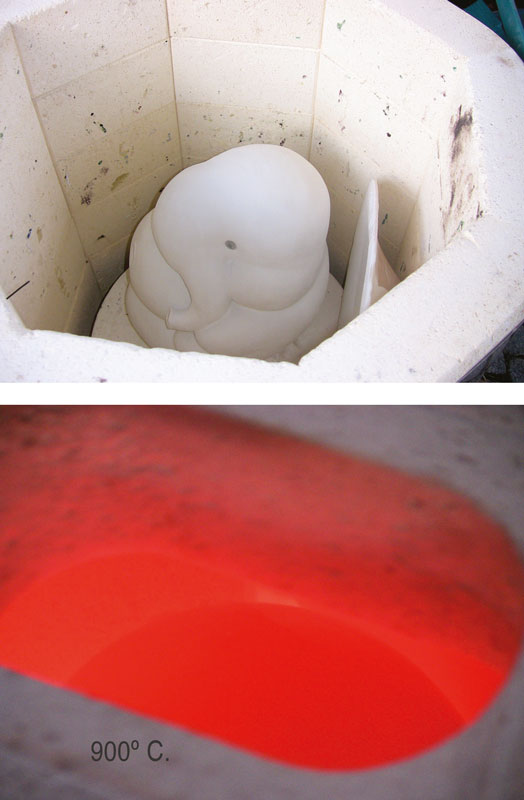
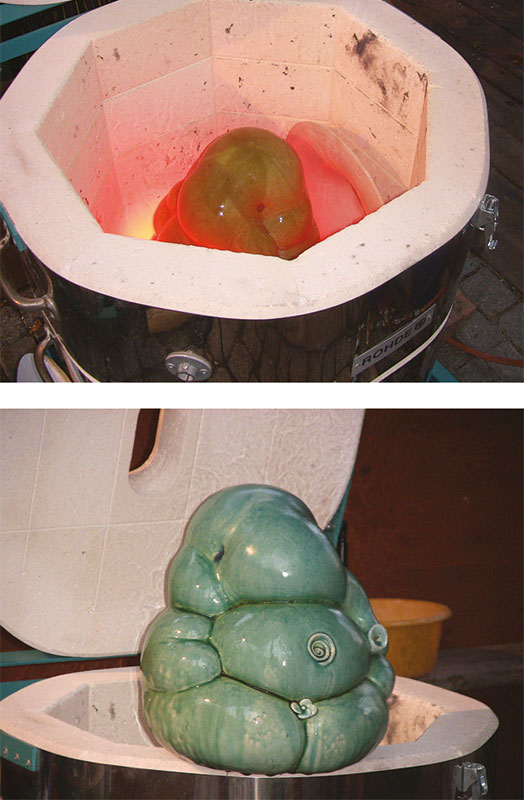
I begin by modelling my sculptures in coarse fireclay, a clay body designed to withstand extreme temperature changes. After drying, each piece is bisque-fired and then glazed.
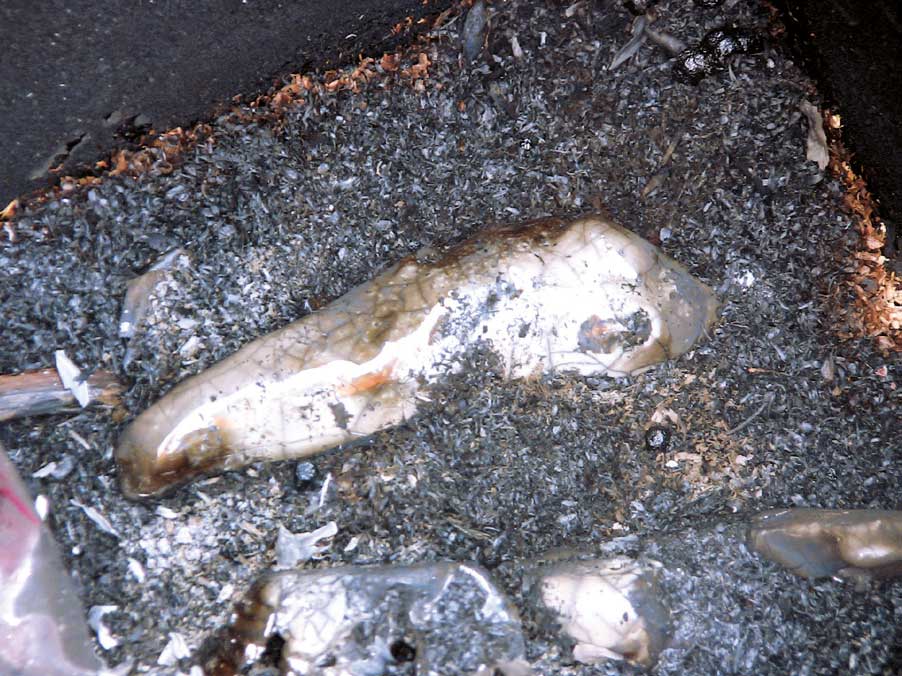
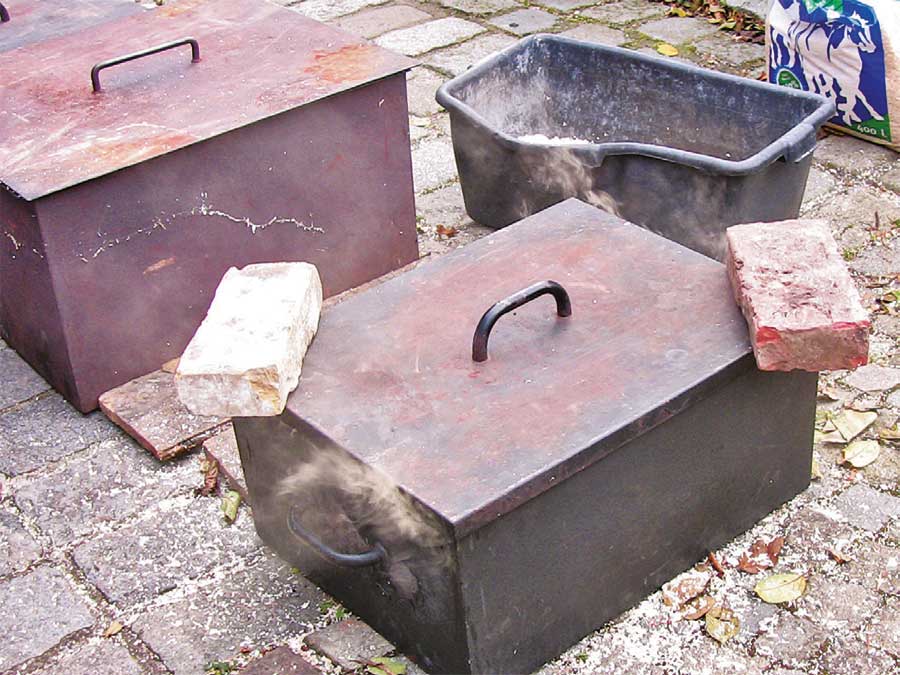
During the Raku firing, the glowing sculpture is removed from the gas kiln at around 1000 °C using tongs and placed into a metal container filled with sawdust. The intense heat ignites the material, and the container is immediately sealed airtight.
Transformation in Smoke
The sudden thermal shock creates a delicate network of fine cracks in the glaze, known as craquelé. At the same time, smoke and oxygen reduction create a reducing atmosphere that reacts with the metal oxides in the glaze, producing subtle shifts in colour as well as metallic and iridescent effects.
Smoke penetrates the fine cracks in the glaze, leaving dark carbon traces that make the delicate craquelé pattern visible.
A Unique Piece in Fire
After cooling, each sculpture is carefully cleaned. Only the delicate craquelé pattern and the unglazed areas retain their dark carbon traces.
The outcome can never be fully controlled. Fire follows its own physical laws, making every firing unique. Each sculpture emerges from this process as a one-of-a-kind work, shaped by the dialogue between clay, fire and chance.